
Quick Answer
New Orleans, LA is the better buy for buyers who want the deepest price arbitrage against comparable Northeast historic architecture, a broader and more liquid overall market, and a culture built into daily life rather than a tourism overlay. Charleston, SC is the better buy for buyers who want beach access within 30 minutes, a more diversified and economically stable metro, stronger documented appreciation, and materially lower flood and hurricane exposure. The single most decisive variable: how much weight a buyer puts on climate risk against purchase price.
New Orleans and Charleston are the two most architecturally significant historic cities in the American South, both built around French and English colonial foundations, both carrying UNESCO-caliber historic districts, and both compared constantly by buyers who are choosing between the Gulf Coast and the Atlantic coast for a culturally rich Southern purchase. They share deep porches, wrought iron, courtyard architecture, and a food and hospitality culture that has shaped how the rest of the country thinks about the South. The comparison is legitimate. But the two markets diverge sharply on price, risk, and economic footing in ways that matter enormously over a real holding period.
This comparison runs them side by side on the variables that actually move the needle: purchase price and market depth, the ultra-luxury ceiling, short-term rental regulation, flood and hurricane risk, appreciation and economic diversification, and the honest lifestyle case for each.
The Fundamental Difference
New Orleans is a city built by water and shaped by it at every scale, from the natural levee that determines which neighborhoods sit on high ground to the drainage canals that define daily infrastructure conversations. The city's French Creole and Spanish colonial architectural DNA, courtyard houses, Creole cottages, shotgun doubles, produced a building tradition unlike anywhere else in North America, and that tradition is still the primary product buyers are purchasing when they buy in the Garden District or Uptown.
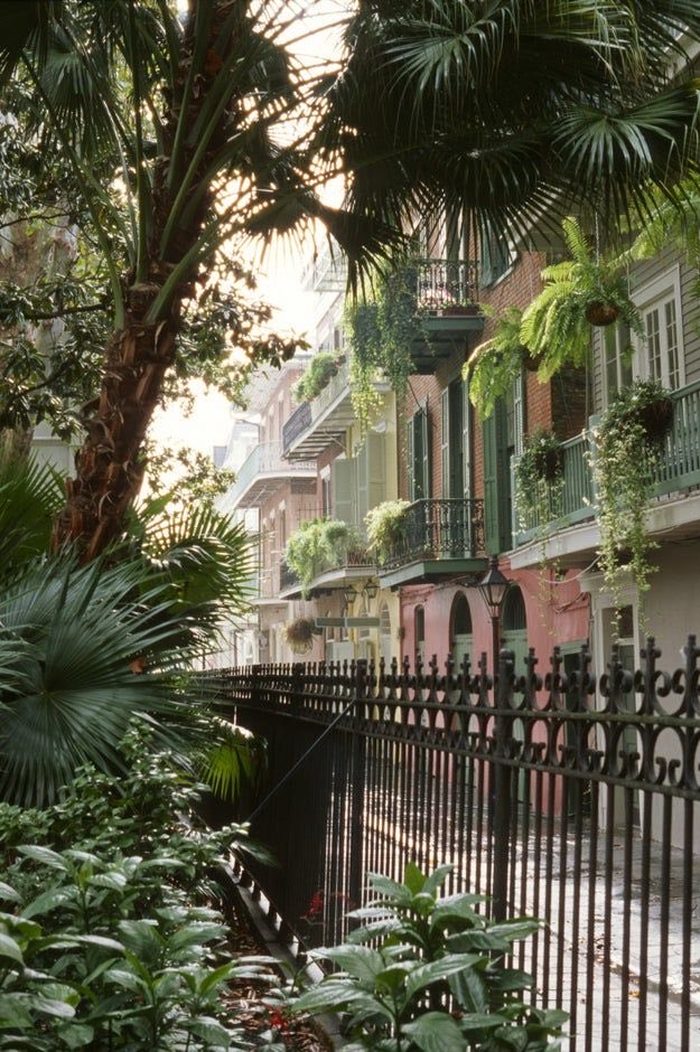
Charleston's historic peninsula carries an English Georgian and Federal architectural tradition, single houses turned sideways to the street to catch the harbor breeze, formal gardens, and a denser, more uniform streetscape than New Orleans' looser, more eclectic historic fabric. Charleston also sprawls outward into a genuine metro, Mount Pleasant, Daniel Island, and the barrier islands, in a way New Orleans' surrounding parishes do not replicate at the same scale or price point.
The short version: New Orleans is a broader, more liquid market built around a culture that shapes daily life at every income level. Charleston is a tighter, more expensive market with a higher ceiling, a more diversified economy, and meaningfully lower climate risk.
Side-by-Side: The Numbers
| Factor | New Orleans, LA | Charleston, SC |
|---|---|---|
| Total active listings | 1,951 | 684 |
| Listings $1M+ | 142 (7% of market) | 210 (31% of market) |
| Current high mark | $8.5M (Garden District) | $28M (South of Broad) |
| Premium sub-market entry | Garden District, more accessible | South of Broad, $2.5M+ average |
| Documented appreciation | Cyclical, tourism-tied | 6.2% avg annual, more consistent |
| STR regulatory environment | Tightened, permit-dependent by zone | Tightly restricted on peninsula |
| Flood and hurricane risk | High overall, varies sharply by elevation | Lower baseline, still real on barrier islands |
| Local economy | Tourism, port, energy | Healthcare, tech, port, tourism |
| Suburban family market | Uptown, university-adjacent | Strong — Mount Pleasant, Daniel Island |
| $900K budget buys | Prime Garden District or Uptown home | Outer neighborhoods or suburbs |
New Orleans data as of August 4, 2026. Charleston data as of June 16, 2026.
The Price Arbitrage in New Orleans' Favor
The most concrete advantage New Orleans holds over Charleston is price and market depth. New Orleans carries 1,951 active listings against Charleston's 684, and only 7 percent of New Orleans' market sits above one million dollars compared to 31 percent of Charleston's. That distribution means a $900,000 budget in New Orleans buys a fully renovated Garden District double with original heart pine floors and significant historic detail. The same budget in Charleston does not reach the peninsula at comparable quality; it buys into the suburbs or requires meaningful compromise on location.
This is the arbitrage argument New Orleans makes against nearly every comparable American city with similar architectural significance, not just Charleston. Buyers relocating from Brooklyn or Boston's Back Bay routinely find that equivalent historic architecture and neighborhood character costs a fraction of what they were prepared to pay, and Charleston, while considerably more accessible than the Northeast, still prices meaningfully above New Orleans at comparable quality.
Where Charleston pulls ahead: the ultra-luxury ceiling
The one place New Orleans does not win the price argument is at the very top of the market. Charleston's current high mark, $28,000,000 at 25 East Battery Street in South of Broad, is more than three times New Orleans' current high mark of $8,500,000 at 2423 Prytania Street in the Garden District. Charleston's ultra-luxury tier is deeper, more established, and draws a buyer pool willing to pay a significant premium for the peninsula's combination of harbor views, architectural pedigree, and proximity to a more economically diversified metro. Buyers whose search genuinely sits above $10 million will find considerably more inventory and precedent in Charleston.
Flood Risk, Hurricane Season, and the Honest Comparison
This is the variable that deserves the most direct treatment, because both cities face real climate risk and neither should be glossed over. New Orleans carries materially higher overall flood exposure, though it varies enormously by neighborhood. Uptown and the Garden District sit on the natural levee, the city's highest and historically most stable ground, with meaningfully lower flood risk than newer developments closer to Lake Pontchartrain. Hurricane season runs June through November and shapes both insurance underwriting and seasonal planning for residents.
Charleston also sits squarely in hurricane season's path and has its own flood zone considerations, particularly on Sullivan's Island and Isle of Palms, but the historic peninsula's elevation and the city's drainage infrastructure generally present a lower baseline risk profile than New Orleans carries as a whole. Insurance costs reflect this difference directly, and buyers comparing the two cities should request current flood zone determinations and multiple insurance quotes for any specific property in either market before making an offer, not after.
Both New Orleans and Charleston have seen flood zone reclassifications and short-term rental regulation shifts in recent years. Confirm current flood zone determination, insurance quotes, and STR permit eligibility directly for any specific address in either city before making a purchase decision. Rules current as of August 2026 may change.
Comparing these two cities for your search?
I'll introduce you to a vetted New Orleans or Charleston specialist within 48 hours. I hold my real estate license in Connecticut and do not represent buyers directly in Louisiana or South Carolina. The introduction is free to you.
Submit a private inquiry · 412-225-0595 · petertumbas@bhhsne.com
Start Your InquiryThe Appreciation and Economy Case for Charleston
Charleston's advantage over New Orleans is economic diversification, and it shows up directly in the appreciation numbers. New Orleans' economy leans heavily on tourism, the Port of New Orleans, and the broader Louisiana energy sector, all real economic engines, but ones that make the city's real estate cycle more closely tied to leisure travel demand and commodity cycles than a buyer might expect from a city this culturally significant.
Charleston's healthcare sector, anchored by MUSC, employs tens of thousands. Boeing, Volvo, and a growing technology corridor have added meaningful employer diversity over the past decade, and the Port of Charleston remains a significant economic anchor in its own right. That diversification is what has driven Charleston's documented 6.2 percent average annual appreciation, a figure that reflects sustained relocation demand across multiple income levels and industries rather than a single sector's health. For buyers whose primary thesis is long-term capital appreciation, Charleston's economic base is the more durable choice.
The beach access question
Charleston has genuine, well-developed Atlantic beach access at Sullivan's Island and Isle of Palms, both within 20 to 30 minutes of the historic peninsula, with their own established real estate markets in the $1.2 million to $5 million range. New Orleans has no comparable beach access; the closest Gulf beaches are well over an hour away and are not part of the city's identity or daily life the way Charleston's barrier islands are. For buyers who want beach access as a genuine regular use case rather than an occasional day trip, this is one of the clearest tie-breakers between the two cities. For more detail on how Charleston's coastal access compares within its own region, see Hilton Head vs. Charleston: Which South Carolina Coastal Market Fits Your Goals in 2026.
Lifestyle: Two Different Versions of Southern Culture
Both cities have exceptional food scenes, deep historic architecture, and a slower pace than the Northeast, but the daily texture of culture is genuinely different between them.
New Orleans builds culture into the infrastructure of ordinary life. Live music is not reserved for weekends; brass bands on street corners, nightly jazz on Frenchmen Street, and neighborhood second-line parades form the background noise of everyday living. Food is a primary social event built into daily routines, not special occasions, and porch culture, spending an evening visiting with neighbors on a stoop, remains standard practice in a way it has largely disappeared elsewhere in America. The festival calendar runs genuinely year-round, not just during Mardi Gras.
Charleston's historic core has a more polished, resort-adjacent character. The dining scene is nationally recognized and consistently excellent, but it presents as refined Lowcountry cuisine rather than the improvisational, deeply local food culture that defines New Orleans. Charleston's daily rhythm is calmer and more curated, supported by a functioning suburban metro with strong schools, healthcare infrastructure, and the kind of convenience amenities, a Target, multiple hospital systems, a Costco in Mount Pleasant, that New Orleans' surrounding parishes do not replicate at the same scale.
Who Each City Actually Fits
New Orleans fits buyers for whom culture is a primary quality-of-life variable, not an amenity checked off a list, and who want the deepest price arbitrage available among the South's architecturally significant historic cities. It suits buyers relocating from dense Northeast or West Coast markets who have run the numbers directly and found the value gap too large to ignore, and who are prepared to engage honestly with hurricane season planning and flood zone diligence as part of ownership rather than an afterthought.
Charleston fits buyers who need suburban family infrastructure and strong school options, who want beach barrier island access as a genuine regular use case, who are relocating for work in healthcare or a growing technology sector, and who want the appreciation stability that a more diversified local economy supports. It also fits buyers whose search genuinely extends into the ultra-luxury tier, where Charleston's inventory and precedent run considerably deeper than New Orleans'. For the neighborhood-level detail behind this comparison, the dedicated market guides for both New Orleans and Charleston cover pricing and zones in full.
The Verdict
Buy in New Orleans, LA if: Your budget is $600,000 to $1.5 million and you want the deepest historic architecture arbitrage available in the South. Culture as daily infrastructure, live music, food, festival season, matters more to you than a polished, resort-adjacent lifestyle. You are prepared to do real flood zone and hurricane diligence as a standard part of ownership, not a dealbreaker.
Buy in Charleston, SC if: Beach access at Sullivan's Island or Isle of Palms is part of your use case. You need strong suburban family infrastructure and school options, or your search genuinely extends into the ultra-luxury tier above $5 million. Long-term appreciation backed by economic diversification is your primary investment thesis, and you want materially lower baseline climate risk than New Orleans carries.
If the decision is still close: The tie-breaker is almost always climate risk versus price. Buyers who can accept New Orleans' flood and hurricane exposure in exchange for a meaningfully lower purchase price and a deeper cultural daily life choose New Orleans. Buyers who want the lowest reasonable climate risk available among the South's major historic cities, along with beach access and economic stability, choose Charleston.
External Resources Worth Reading
FEMA's Flood Map Service Center provides current flood zone determinations for any specific address in either city and is essential reading before any offer that depends on insurance cost assumptions. The City of Charleston's Short-Term Rental regulations page covers current permit restrictions on the peninsula for buyers whose Charleston purchase model includes rental income.
Frequently Asked Questions
Is New Orleans, LA or Charleston, SC a better place to buy real estate?
New Orleans, LA is the better choice for buyers who want the deepest price arbitrage against comparable Northeast architecture, a broader and more liquid market, and a culture built into daily life rather than a tourism overlay. Charleston, SC is the better choice for buyers who want beach access within 30 minutes, a more diversified economy, stronger documented appreciation, and materially lower hurricane and flood exposure. The decision usually comes down to how much weight a buyer puts on climate risk versus purchase price.
Is New Orleans cheaper than Charleston for a luxury home?
Yes, meaningfully. New Orleans carries 1,951 active listings with only 142 priced above one million dollars, a broad and liquid market where a fully renovated Garden District double routinely lists well below comparable Charleston architecture. Charleston's peninsula median runs around $1.1 million, with South of Broad averaging $2.5 million or more. A $900,000 budget goes considerably further on comparable historic quality in New Orleans.
Which city has a higher ceiling for ultra-luxury real estate, New Orleans or Charleston?
Charleston, decisively. Charleston's current high mark is $28,000,000 at 25 East Battery Street, more than three times New Orleans' current high mark of $8,500,000 at 2423 Prytania Street. Charleston's ultra-luxury tier is deeper and more established. New Orleans offers a broader, more accessible market overall, but Charleston's ceiling is considerably higher for buyers searching above $10 million.
Does New Orleans or Charleston have better short-term rental regulations?
Neither offers unrestricted opportunity. New Orleans has tightened STR regulation significantly, with eligibility varying by zoning district. Charleston's historic peninsula has tightly restricted STR permits, pushing rental-focused buyers toward Sullivan's Island or Isle of Palms instead. Buyers in either city should confirm current permit eligibility for a specific address before assuming any rental income thesis.
Which city has more flood and hurricane risk, New Orleans or Charleston?
New Orleans carries materially higher overall flood exposure, though it varies by neighborhood. Uptown and the Garden District sit on the natural levee, the city's highest ground, with lower risk than areas near the lake. Charleston also faces hurricane season and flood considerations on its barrier islands, but the historic peninsula's elevation generally presents a lower baseline risk profile than New Orleans as a whole. Confirm current flood zone determinations for any specific property in either city.
What is the lifestyle difference between New Orleans and Charleston?
New Orleans builds culture into daily infrastructure: live music, a serious culinary scene, and a year-round festival calendar shape ordinary life, not just visits. Charleston offers a comparably rich historic core with a more polished, resort-adjacent character, stronger suburban family infrastructure in Mount Pleasant, and genuine beach access within 30 minutes. New Orleans feels built around its culture. Charleston feels like a historic city with a diversified, functioning metro and beach access built around it.
Ready to look at either city?
I'll introduce you to a vetted New Orleans or Charleston specialist within 48 hours. I hold my Connecticut real estate license and do not represent buyers directly in Louisiana or South Carolina. The referral introduction is free to you. A referral fee is paid by the receiving agent at closing, not by the buyer.
Submit a private inquiry · 412-225-0595 · petertumbas@bhhsne.com
Start Your Inquiry